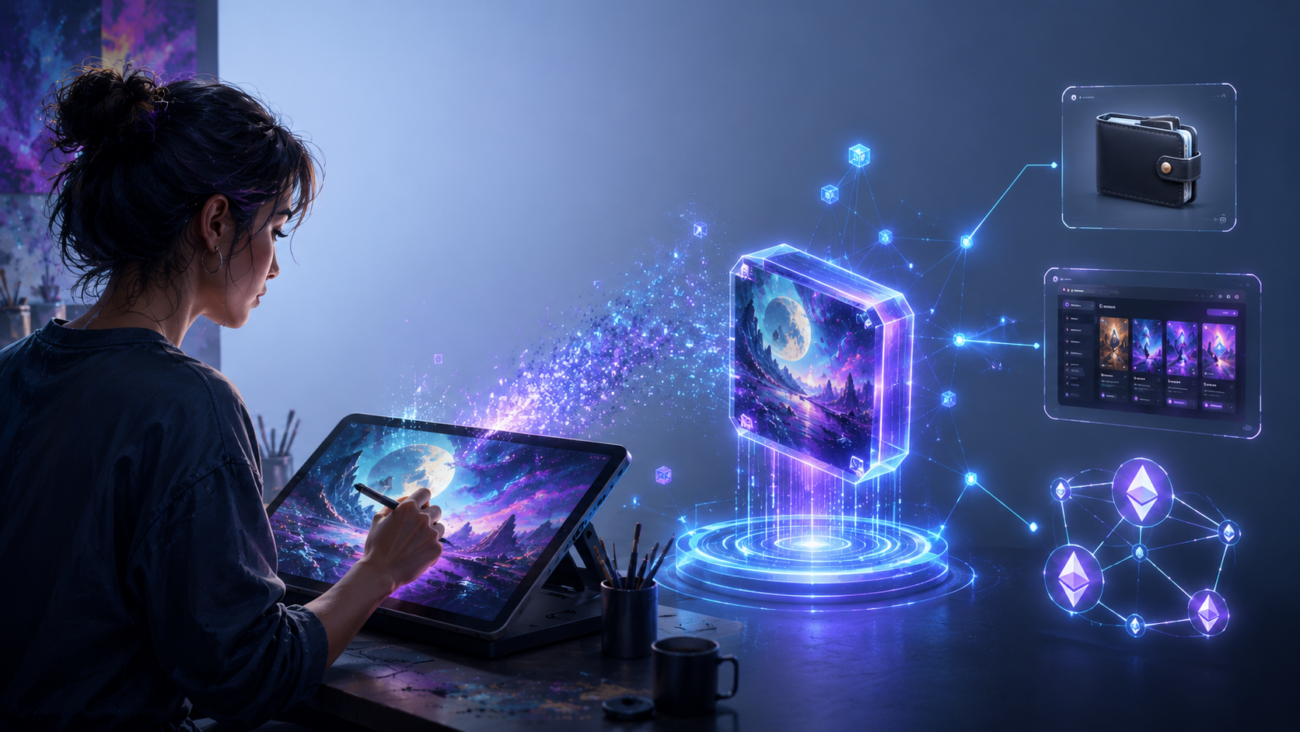
How to Mint and Sell an NFT
The digital renaissance is here, and it is decentralized. For digital artists, musicians, and creators, the blockchain has opened up an entirely new economy. If you have been admiring the boom of digital art NFTs and want to carve out your own space in the Web3 world, you are in the right place.
Understanding exactly how to mint and sell an NFT (Non-Fungible Token) might seem overwhelming at first, full of technical jargon and complex platforms. However, the process is incredibly straightforward once you break it down into manageable steps.
This comprehensive guide will walk you through the entire process, from setting up your digital wallet to strategizing your first sale.

Step 1: Choose Your Blockchain Network
Before you can mint and sell NFT artwork, you need to decide which blockchain will host your digital assets. The blockchain you choose dictates your fees, your audience, and the environmental impact of your project.
For most creators, the choice comes down to a few major players. Understanding the differences between Ethereum and Polygon for NFTs is crucial:
- Ethereum (ETH): The undisputed king of NFTs. It boasts the highest trading volume and the most affluent collectors. However, it is also known for high network traffic, which leads to expensive transaction costs.
- Polygon (MATIC): A Layer-2 scaling solution built on top of Ethereum. It is widely considered the best blockchain for low-cost minting. It offers high speeds and minimal fees while still connecting to the broader Ethereum ecosystem.
Actionable Tip: If you are a beginner testing the waters, Polygon is highly recommended to keep your initial overhead low.
Step 2: Set Up and Secure Your Crypto Wallet
To interact with the blockchain, you need a digital crypto wallet. This wallet will hold your cryptocurrency and your NFTs.
A standard MetaMask wallet setup for beginners is the easiest way to start. Available as a browser extension and mobile app, MetaMask acts as your digital passport. Simply download the extension, create a strong password, and follow the prompts.
During setup, you will be given a 12-word seed phrase. This is where crypto wallet security best practices come into play:
- Never share your seed phrase with anyone, not even customer support.
- Write the phrase down on physical paper and store it in a fireproof safe.
- Do not save your seed phrase as a screenshot or in a plain-text file on your computer.
Once your wallet is secure, you will need some funds. You must look into buying cryptocurrency for transaction fees (like ETH or MATIC) through an exchange like Coinbase or Binance, and transferring it to your new MetaMask address.
Step 3: Select the Right NFT Marketplace
An NFT marketplace is the platform where you will display, mint, and sell your work. Think of it as the Amazon or eBay of digital assets.
If you do a quick OpenSea vs Rarible marketplace comparison, you will find that both are excellent choices, but they cater to slightly different needs:
- OpenSea: The largest and most popular platform. It is highly user-friendly, supports multiple blockchains, and has the largest pool of active buyers.
- Rarible: A heavily community-focused platform with its own governance token (RARI). It is slightly more curated and offers great features for creators looking to build tight-knit communities.
Once you have chosen your platform, connecting crypto wallet to NFT marketplace is a breeze. Simply navigate to the marketplace’s homepage, click “Connect Wallet,” select MetaMask, and sign the digital prompt.

Step 4: Prepare Your Digital Art and Legal Rights
Before figuring out exactly how to upload digital art to blockchain networks, you must prepare your files. Marketplaces support various formats, including JPG, PNG, GIF, MP4, and even 3D models. Ensure your file is high resolution and optimized for web viewing.
Equally important is understanding the copyright and ownership of digital assets. Minting an artwork does not inherently give you the copyright unless you are the original creator. You must own the intellectual property rights to the content you are uploading. Conversely, when a collector buys your NFT, they are buying a verifiable token of ownership, not necessarily the commercial copyright to reproduce the image—unless you explicitly state that in your terms.
Step 5: The Minting Process
Minting is the act of publishing your digital file onto the blockchain so that it can be bought, sold, and tracked.
In the early days of Web3, smart contract deployment for creators required heavy coding knowledge. Today, platforms like OpenSea handle the underlying smart contracts for you.
When you upload your file, the platform generates NFT metadata and IPFS storage links. IPFS (InterPlanetary File System) is a decentralized storage network. Instead of storing your art on a single company’s server (which could crash or be deleted), IPFS stores the data across a peer-to-peer network, ensuring your art lives on the blockchain forever.
Understanding and Managing Gas Fees
During minting, you will likely encounter network costs. So, what are gas fees in crypto? Simply put, gas fees are the computational costs required for miners to process and validate your transaction on the blockchain. On Ethereum, these fees fluctuate based on network congestion (see Ethereum’s gas documentation).
If gas fees are currently too high, you can utilize lazy minting to avoid upfront costs. Lazy minting is a brilliant feature offered by many marketplaces. It allows you to create the NFT off-chain. The item is only officially minted onto the blockchain at the exact moment it is sold, passing the gas fee onto the buyer (for example, OpenSea’s lazy minting overview). This allows creators to launch collections with zero initial capital.

Step 6: Pricing Strategies and Royalties
Your art is uploaded, and the metadata is secure. Now it is time to list it for sale.
When setting your price, it is vital to understand the listing price vs floor price strategy.
- Listing Price: The specific cost you assign to an individual piece of art.
- Floor Price: The lowest price of any item within your entire collection.
As a beginner, establishing an accessible floor price helps attract initial collectors and builds momentum. You can price your rarest, most detailed pieces higher, but maintaining a reasonable floor price keeps the barrier to entry low for new fans.
Finally, one of the greatest benefits of Web3 for artists is setting secondary sale royalties. During the minting process, you can set a royalty percentage (typically between 5% and 10%). This means that if a collector buys your art today and resells it to someone else five years from now for a massive profit, the smart contract will automatically route your royalty percentage directly back to your wallet (see OpenSea’s guide to how royalties work). It ensures you continually profit from the rising value of your work.
