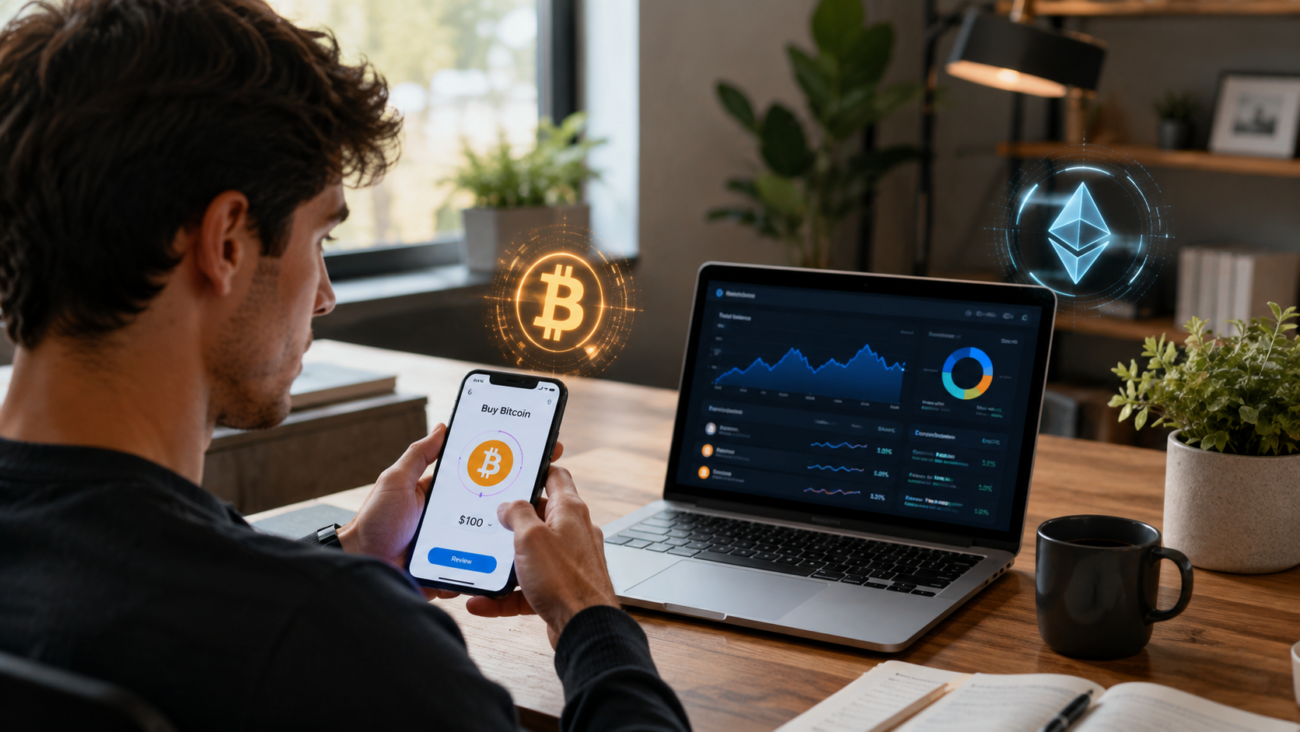
How to buy your first crypto
Welcome to the exciting world of digital finance! If you have been watching the markets and wondering how to buy your first crypto, you are in the right place. Taking the plunge to buy crypto can initially feel intimidating. With unfamiliar jargon, fluctuating charts, and endless news cycles, it is easy to feel overwhelmed.
However, participating in this digital revolution is actually quite straightforward once you break it down into manageable steps. Whether your goal is to buy bitcoin as a long-term store of value or to explore the broader ecosystem of digital assets, this comprehensive guide will walk you through exactly what you need to know. If you want a neutral, beginner-friendly primer on digital assets and risks, start with the SEC’s overview on cryptocurrency investing basics.

Step 1: Choose the Right Platform
To purchase cryptocurrency, you first need a reliable platform. Think of this as your digital brokerage. For most people, a centralized exchange (CEX) is the easiest and safest starting point.
When searching for the best cryptocurrency exchanges for beginners, you should prioritize platforms that offer intuitive user interfaces, robust security, and excellent customer support. Industry leaders like Coinbase, Kraken, and Binance.US are popular because they streamline the buying process, allowing you to easily link your traditional bank account to your new crypto portfolio.
As you become more advanced in crypto trading, you might learn how to use a decentralized exchange (DEX) like Uniswap or PancakeSwap. A DEX allows you to trade directly from your private wallet without a middleman. However, because decentralized platforms require a bit more technical know-how and lack customer support, beginners should stick to trusted centralized exchanges for their very first purchase.
Step 2: Create and Secure Your Account
Once you have selected an exchange, it is time to sign up. Registering is usually as simple as providing an email address and creating a strong password.
Identity Verification
To comply with financial regulations and prevent fraud, reputable platforms will require you to prove your identity. Understanding how to complete identity verification for crypto (often referred to as KYC, or Know Your Customer) is simple. You will typically be asked to:
- Provide your full legal name and address.
- Upload a clear photo of a government-issued ID (like a passport or driver’s license).
- Take a live selfie to prove you match your ID.
Approval usually takes anywhere from a few minutes to a few days.
Bulletproofing Your Security
Before depositing a single cent, you must prioritize securing accounts with two-factor authentication (2FA). Do not rely solely on SMS text messages for 2FA, as hackers can use “SIM-swapping” to intercept your texts. To understand this risk and how it works, see the FTC’s guidance on SIM swap scams. Instead, download an authenticator app like Google Authenticator or Authy. This generates a temporary code on your device that changes every 30 seconds, adding an incredibly strong layer of defense against unauthorized access.

Step 3: Fund Your Account
With your account verified and secured, the next step is funding exchange account with fiat currency (traditional money like USD, EUR, or GBP). Exchanges offer several ways to do this:
- Bank Transfers (ACH/SEPA): This is usually the cheapest method, often carrying zero fees. However, it can take 1 to 5 business days for the funds to clear.
- Credit/Debit Cards: This allows for instant purchases, but be warned-card processors and exchanges usually charge hefty convenience fees ranging from 3% to 5%.
- Third-Party Providers: Many exchanges now support PayPal, Apple Pay, or Google Pay for added convenience.
Actionable Tip: If you are not in an immediate rush, use a direct bank transfer to save money on fees, leaving you with more capital to actually invest.
Step 4: Choose Your Cryptocurrency
You have money in your account, but what should you actually buy?
The Heavyweights vs. The Challengers
The debate of bitcoin vs altcoins for first-time buyers is a fundamental rite of passage. Bitcoin (BTC) is the original, most widely adopted, and heavily capitalized digital asset. If you want to learn more about Bitcoin’s design and how it works at a technical level, see the Bitcoin whitepaper. Because it is viewed as “digital gold,” it is generally considered the safest and least volatile entry point for beginners.
“Altcoins” (alternative coins) include everything else-from Ethereum (ETH) and Solana (SOL) to smaller, niche projects. While altcoins can offer massive growth potential and unique technological use-cases (like smart contracts), they carry significantly higher risk and volatility. For your first purchase, sticking to Bitcoin or Ethereum is highly recommended.
Seeking Stability
If you want to move fiat money into the crypto ecosystem but aren’t ready to expose yourself to price volatility just yet, consider buying usdt or usdc stablecoins. Stablecoins are digital assets pegged 1:1 to traditional currencies like the US Dollar. For issuer details and transparency resources, you can review USDC (Circle) and USDT (Tether transparency). Holding them allows you to keep funds on the blockchain, ready to be deployed the moment you decide to make a trade, without worrying about the market crashing overnight.

Step 5: Execute the Trade
Now comes the exciting part-making your purchase. When you open the trading screen, you will be presented with a few different ways to buy.
Order Types
To get the most out of your money, having market orders vs limit orders explained is crucial. If you want a quick reference definition, see Investopedia’s overview of a market order and a limit order:
- Market Order: This executes your trade immediately at the current available market price. It is the easiest option and guarantees your order will be filled instantly.
- Limit Order: This allows you to set a specific, lower price at which you are willing to buy. Your order will only trigger if the asset’s price drops to your specified target. This gives you more control but means your order might never execute if the price goes up.
Understanding the Costs
Do not let hidden costs eat into your investment. Understanding crypto transaction fees and gas will make you a smarter investor. For a solid technical explanation of network fees on Ethereum, see the Ethereum gas documentation. When you buy on a centralized exchange, the platform charges a trading fee (usually a fraction of a percent). However, if you later decide to move your crypto off the exchange to a private wallet, you will incur a network fee (often called “gas”). Gas fees are paid to the miners or validators who process transactions on the blockchain, and they fluctuate based on how busy the network is.
Step 6: Store Your Crypto Safely
Buying your digital assets is only half the battle; storing them securely is just as critical. The crypto world operates under the ethos of “not your keys, not your coins.”
Custodial vs. Non-Custodial
To grasp the concept of digital ownership, you must understand the difference between custodial and non-custodial wallets.
- Custodial Wallets: When you leave your assets on an exchange like Coinbase, you are using a custodial wallet. The exchange holds the ultimate private keys to the crypto. It is convenient, but if the exchange goes bankrupt or is hacked, you could lose your funds.
- Non-Custodial Wallets: Setting up a secure digital wallet (like MetaMask, Trust Wallet, or Phantom) gives you a non-custodial solution. You alone possess the “private keys” or “seed phrase” (a 12 to 24-word master password). You have total control, but if you lose your seed phrase, no customer support team can recover your funds.
The Ultimate Security: Hardware Wallets
For serious investors, learning the benefits of hardware wallets for long-term storage is a game-changer. A hardware wallet (like a Ledger or Trezor) is a physical device that resembles a USB drive. It stores your private keys offline, entirely separated from the internet. This “cold storage” method makes it virtually impossible for remote hackers to steal your crypto, providing ultimate peace of mind.

Step 7: Invest Wisely and Stay Safe
Once you have made your first purchase, it is easy to get glued to the price charts. To avoid emotional trading, you need a strategy.
The Power of Routine
Instead of trying to “time the market” by making massive one-off purchases, consider utilizing the dollar cost averaging crypto investment strategy (DCA). If you want a classic explanation of dollar-cost averaging, see Investopedia’s dollar-cost averaging guide. DCA involves investing a fixed amount of money at regular intervals-for example, buying $50 worth of Bitcoin every Friday-regardless of whether the market is up or down. Over time, this smooths out the purchase price, minimizes the impact of short-term volatility, and removes the stress of trying to predict market bottoms.
Guarding Against Malice
As a decentralized frontier, the crypto space attracts scammers hoping to separate beginners from their money. Protecting crypto assets from common scams requires extreme vigilance. For scam and fraud reporting basics in the U.S., the FBI’s Internet Crime Complaint Center (IC3) is a good starting point:
- Never share your seed phrase: No legitimate support staff will ever ask for your 12 or 24-word recovery phrase.
- Beware of “double your money” offers: If you see a celebrity on social media promising to send back double the amount of crypto you send them, it is a scam.
- Watch out for phishing links: Always bookmark your exchange’s official URL. Scammers frequently buy ads on search engines to promote fake, look-alike websites designed to steal your login credentials.

Step 8: Keep Taxes in Mind
Finally, no beginner guide would be complete without mentioning the tax implications of buying cryptocurrency.
In most jurisdictions, including the United States, the UK, and Canada, cryptocurrency is treated as property for tax purposes. For the U.S. baseline, refer to the IRS virtual currency guidance and the IRS virtual currency FAQs. Simply buying crypto with fiat and holding it in your wallet is generally not a taxable event. However, you will likely need to report capital gains or losses when you:
- Sell your crypto for traditional fiat currency.
- Trade one cryptocurrency for another (e.g., swapping Bitcoin for Ethereum).
- Use crypto to purchase goods or services.
- Earn crypto through staking, mining, or yield farming.
Actionable Tip: Keep meticulous records from day one. Many exchanges offer downloadable tax reports, and you can easily sync your wallets with specialized crypto tax software to automate the process when tax season rolls around.
