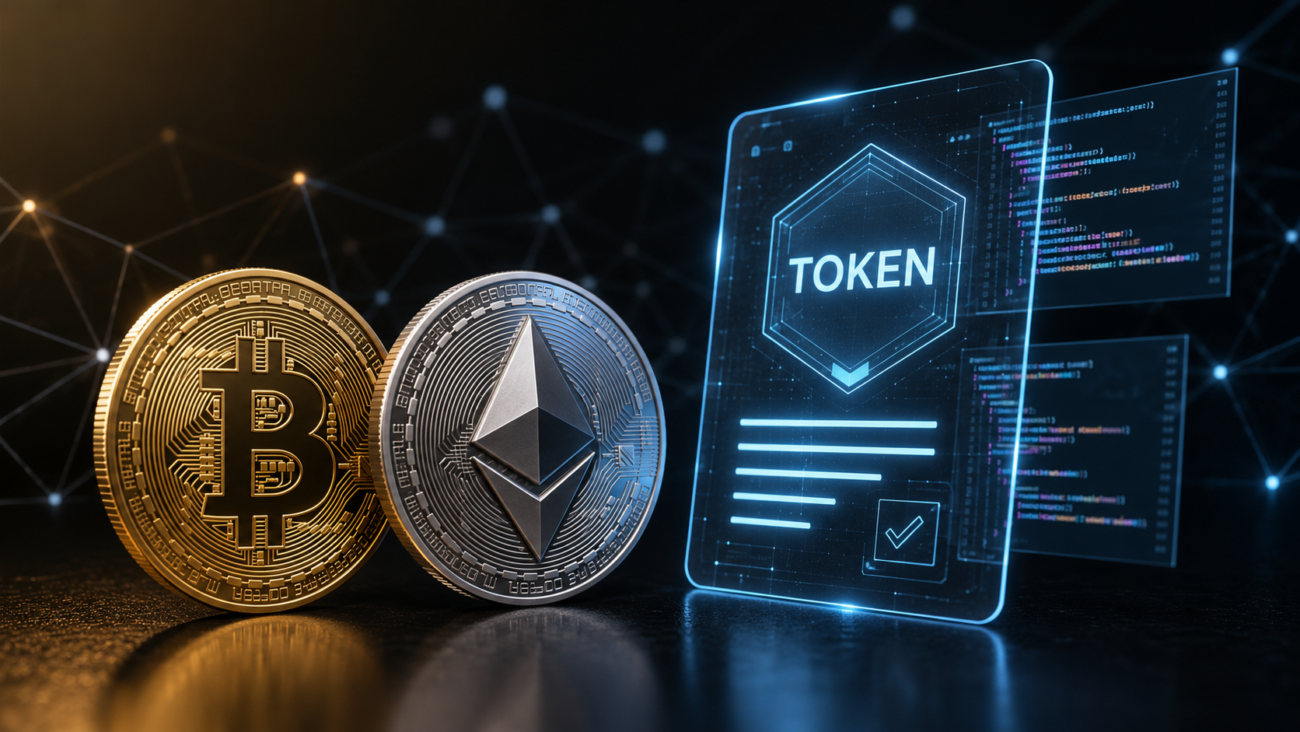
Cryptocurrency: Difference between coins and tokens
If you have recently stepped into the dynamic world of digital assets, you have likely heard the terms “coin” and “token” used interchangeably. While they might seem identical at a glance, they represent entirely different technologies and use cases. Understanding the Cryptocurrency: Difference between coins and tokens is a fundamental step for anyone looking to invest, develop, or simply navigate the blockchain space with confidence.
In this comprehensive guide, we will break down the essential aspects of cryptocurrency coins vs tokens, exploring how they operate, what gives them value, and why distinguishing between them matters for your digital portfolio.

What Are Crypto Coins? The Foundation of the Blockchain
To start, let’s look at crypto coins. A digital coin is an asset that operates on its own independent, proprietary blockchain. Think of it like a country possessing its own native currency and banking infrastructure.
When analyzing the characteristics of standalone blockchain ecosystems, you will notice that they have their own underlying ledgers, independent consensus mechanisms (like Proof of Work or Proof of Stake), and specific rules for validating transactions.
So, what is the purpose of a native cryptocurrency? Primarily, it serves as a medium of exchange, a store of value, and the core mechanism for securing its home network. Miners or validators are rewarded with these native coins for keeping the network safe. Bitcoin (BTC) is the most famous example of a coin. Ether (ETH) is another, acting as the native coin of the Ethereum blockchain.
What Are Crypto Tokens? The Programmable Assets
Moving on to tokens, a standard token definition states that it is a digital asset built on top of an existing blockchain rather than having its own. This brings us to the core contrast of native blockchain assets vs programmable tokens. While a coin acts as the foundational money of a network, a token is highly programmable and can represent anything from a voting right to a digital piece of art.
But how are crypto tokens created on existing blockchains? Developers utilize pre-existing network architectures by deploying code. This revolutionary process allows for minting tokens without building a new blockchain from scratch, saving immense amounts of time, money, and computational resources.

The Role of Smart Contracts
Tokens rely heavily on smart contract functionality for digital assets. A smart contract is self-executing code that automatically enforces the rules of the token. For instance, comparing bitcoin vs ethereum erc-20 standards perfectly illustrates this difference. Bitcoin is a native coin on its own ledger. ERC-20, on the other hand, is a standardized smart contract blueprint that allows anyone to easily create tokens on the Ethereum network.
The Core Differences: Architecture and Fees
Understanding the operational differences is vital, especially regarding network mechanics and transaction costs.
- Network Fees: A major factor to consider is gas fees and transaction processing on host networks. If you want to transfer an ERC-20 token like Chainlink (LINK) to another wallet, you cannot pay the transaction fee in LINK. You must pay the fee in ETH, the native coin of the host blockchain.
- Layer 1 vs Layer 2: It is also helpful to note the difference between layer 1 coins and layer 2 tokens. Layer 1 coins (like ETH or SOL) secure the base network. Layer 2 tokens (like Arbitrum (ARB) or Optimism (OP)) exist on scaling solutions built on top of Layer 1, generally serving governance or utility purposes to make transactions faster and cheaper.
Types of Tokens: Utility, Security, and Governance
Tokens are incredibly versatile because they are backed by code rather than just a native ledger. Let’s explore the primary token classifications.
1. Utility Tokens and Security Tokens
For both investors and regulators, identifying utility tokens versus security tokens is critical.
- Utility Tokens: These provide users with access to a specific product or service within an ecosystem. They are not designed as financial investments.
- Security Tokens: These act like traditional securities (such as stocks or bonds) and represent an investment contract, ownership stake, or a promise of future profits. They are subject to strict financial regulations (see the SEC’s Framework for “Investment Contract” Analysis of Digital Assets).
2. Governance Tokens and dApps
Decentralized applications (dapps and their relationship to platform tokens) are central to the modern crypto ecosystem. A decentralized exchange like Uniswap relies on its platform token, UNI.
Furthermore, the role of governance tokens in decentralized finance (DeFi) cannot be overstated. Governance tokens give holders voting power to propose and decide on upgrades, fee structures, and protocol changes, acting as the democratic backbone of DeFi platforms.

Evolution and Flexibility in the Crypto Space
The blockchain space is highly fluid. Assets can evolve and interact in fascinating ways.
Can a crypto token become a coin? Absolutely. This typically happens through an event called a “mainnet swap.” A famous example is Binance Coin (BNB). It was originally launched as an ERC-20 token on the Ethereum network to raise funds. Later, Binance built its own blockchain and allowed users to swap their ERC-20 tokens for the new native BNB coins on a 1:1 basis.
Cross-Chain Communication Today, we also see the growing interoperability of tokens across multiple networks. Through the use of “wrapped” tokens (like Wrapped Bitcoin or WBTC) and blockchain bridges, users can take an asset from one network and represent it as a token on another, unlocking massive liquidity across the entire crypto ecosystem.
Actionable Tips: Coins vs Tokens
Whether you are an investor looking to diversify or a developer planning your next project, keep these practical tips in mind:
- For Developers: When choosing between launching a coin or a token, consider your goals. If you want to create a brand-new decentralized infrastructure, you need to build a coin. If you simply want to launch a decentralized application, a community voting system, or a loyalty program, creating a token on Ethereum, Solana, or Polygon is vastly more efficient.
- For Investors: Always know what you are holding. If you are holding a token, make sure you own a sufficient amount of the host network’s native coin to cover gas fees when it comes time to sell or transfer.
- Do Your Research: Scrutinize the smart contracts of tokens before buying. Because tokens are incredibly easy to create, the barrier to entry is low, making the token space more susceptible to scams than established native coins.
